
5 Common eBook Formatting Mistakes That Ruin the Reader Experience
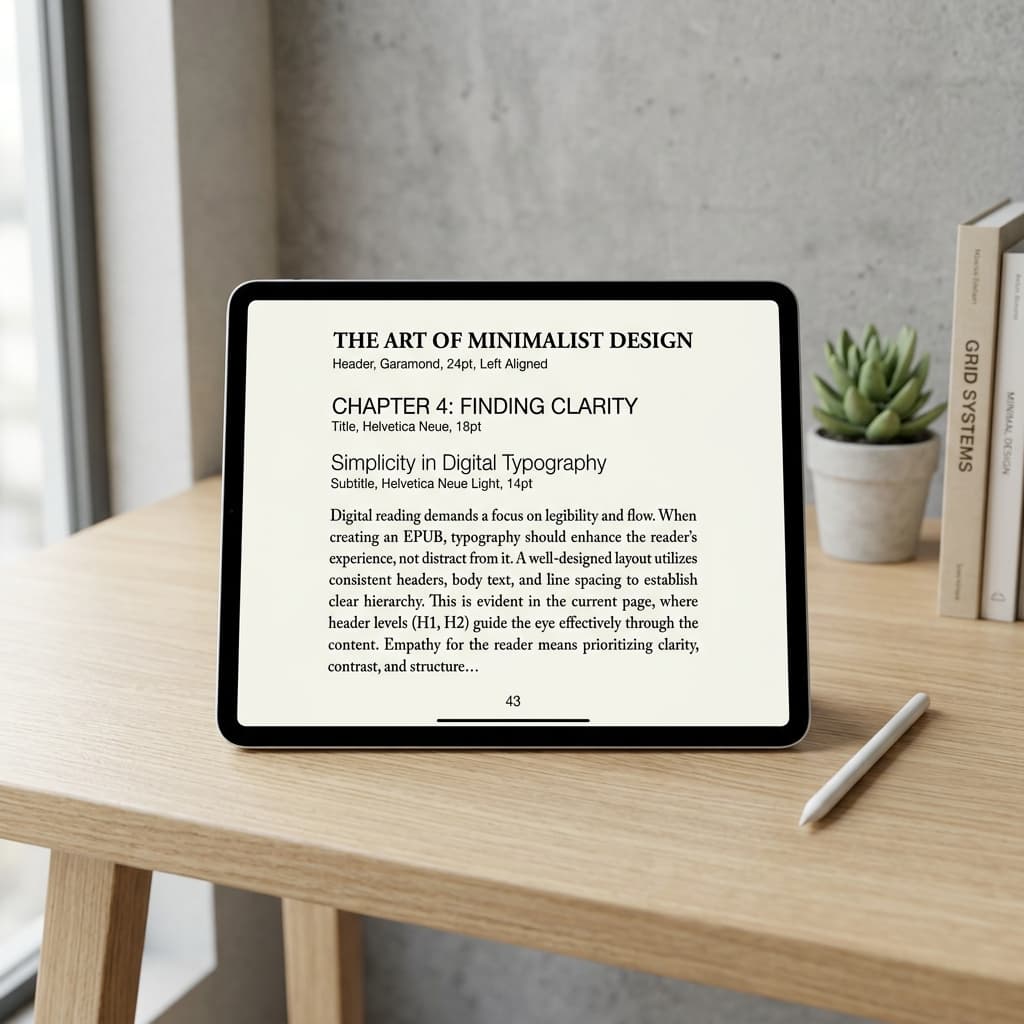
Many self-published authors spend months perfecting their manuscripts, only to upload files with poor eBook formatting. Unlike print books, which have fixed layouts, eBooks must adapt to various screens, fonts, and device preferences. This adaptive behavior is called reflowable layout.
If your file formatting is broken, readers will leave negative reviews regarding the reading experience rather than the story. Here are 5 common errors to avoid.
1. Using Forced Line Breaks (Hard Returns)
Pressing "Enter" at the end of every line in your word processor creates hard breaks. On an eBook reader, this results in chopped sentences and half-empty lines when the reader changes the font size. Always let the text wrap naturally and use proper paragraph styles for spacing.
2. Static Page Numbers and Headers
Because eBook text is reflowable, page numbers do not exist in the same way they do in print. Adding static page numbers or headers in the header/footer of your Word file will cause them to appear in the middle of sentences on Kindle. Remove headers and footers entirely before compiling.
3. Unoptimized, Low-Resolution Images
Images in eBooks must be formatted in RGB color mode, saved at 300 DPI, and compressed. Low-resolution images look pixelated on high-definition tablets, while massive, uncompressed images increase your file size. Remember that Amazon KDP charges a delivery fee of $0.15 per megabyte for 70% royalty books—smaller file sizes mean higher profits!
4. Missing or Static Table of Contents (TOC)
eBook distributors require both an inline Table of Contents and an NCX (logical) Table of Contents. A static list of chapters with page numbers is useless. Instead, hyperlink your chapters directly so readers can jump to any section with a single tap.
5. Uploading Unclean Word Documents
Simply converting a ".docx" file to EPUB format using automated converters often leaves behind hidden styling tags, bloated HTML, and broken font spacing. For a clean file that loads instantly and works on Apple Books, Google Play, and Amazon Kindle, it is highly recommended to seek professional eBook compilation services.